
What Is a Cranial Helmet and When Does a Baby Need One?
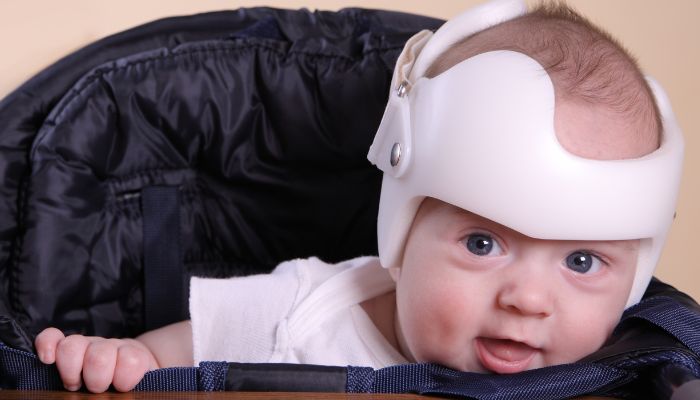
Hearing that your baby might need a cranial helmet can be overwhelming, especially when you are already doing tummy time, repositioning, and all the other activities that come with the early months. The good news is that most head shape concerns are treatable, and a cranial helmet for babies is one of the most established options for guiding growth when conservative steps are not enough.
In this guide, you will get to know about what is a cranial helmet,what it is used for, when cranial helmet therapy is considered, what day-to-day wear and care looks like, and what parents should know about comfort, follow-ups, and cranial helmet cost.
What is a cranial helmet?
A cranial remolding helmet, also known as a cranial band, is a custom orthosis designed to help correct an infant’s head shape as the skull grows. You may also hear the medical term cranial remolding orthosis or cranial orthosis.
Unlike a protective sports helmet, a baby cranial helmet does not work by applying pressure directly to the skull. It works by creating space. It supports the prominent areas and leaves room where the head needs to round out, allowing growth to fill the flatter regions over time.
What is a cranial helmet used for?
A cranial helmet for baby is most commonly used for positional head shape changes, including:
Plagiocephaly: flattening on one side of the back of the head with asymmetry
Brachycephaly: a wider, shorter head shape, often with some flattening at the back
Scaphocephaly: a long, narrow head shape, sometimes linked to early suture fusion
Craniosynostosis often needs surgical assessment.
It is essential to separate positional head flattening from craniosynostosis, where skull sutures fuse too early.
Helmet therapy can be used as a follow-up to craniosynostosis surgery. Your clinician will guide you through the next steps, based on evaluation and imaging results as needed.
Indications for a cranial helmet
Many mild flat spots can be improved with simple repositioning strategies and a supervised tummy time, especially during the first few months. A cranial helmet for babies is usually considered when:
There is some moderate to severe flattening or asymmetry
Repositioning and physiotherapy have not improved the head shape enough
The baby is reaching the age where growth is still rapid, but time is passing
Most specialists find that the best window for starting cranial helmet treatment is often around 4 to 6 months, when the skull is still very responsive to guided growth. After about 12 months, improvement is still possible in selected cases, but results can be slower and less predictable because head growth has already begun to slow.
When a baby prefers to turn their head to one side, it can result in associated torticollis. Treating torticollis alongside helmeting can make a real difference, and a care plan may include physiotherapy.
How cranial helmet therapy works
Cranial care is part of the paediatric orthotics services, with a clinical pathway built around assessment, precision fitting, and follow-up.
Your journey typically includes:
Comprehensive assessment
A review of your baby’s head shape, neck range of motion, sleep and positioning habits, and overall development has been completed.
Digital scanning and modelling
Many modern helmets are made using a fast, non-invasive scanner that creates a 3D model of the baby’s head. This supports accuracy and reduces the need for messy impressions.
Custom design and fabrication
Depending on the case, a helmet may be produced using advanced workflows, including a 3D printed cranial helmet option where appropriate.
Fitting and parent training
You will be shown how to apply it correctly, how to check your skin, and how to manage your daily routines.
Ongoing adjustments
Follow-ups are essential because your baby’s head grows quickly. Adjustments are often scheduled every two weeks to maintain the fit’s safety and effectiveness.
Is helmet therapy painful?
Cranial helmet therapy is designed to be comfortable. A well-fitted infant cranial helmet should not cause pain because it is not meant to squeeze the skull. Most babies adapt quickly, including during sleep.
What you may notice early on is warmth and mild sweating during the first week or two. This usually improves as your baby adjusts to their surroundings.
Long-term effects of cranial helmet
Parents often worry about the long-term effects of wearing a cranial helmet. For positional head shape conditions, helmets are widely used and generally well tolerated when prescribed and monitored correctly. The helmet does not change brain growth. It guides skull growth patterns as the skull naturally expands.
The most common longer-term issue is not the helmet itself, but delayed assessment. Early evaluation gives the best chance of effective, timely treatment, whether that is repositioning, physiotherapy, a helmet, or a combined approach.
Practical wear and care: how to clean a baby cranial helmet
Daily hygiene is vital for comfort and skin health. If you are wondering how to clean baby cranial helmet devices safely, follow your clinician’s instructions first. A common approach is:
Clean the inside daily using clear rubbing alcohol
Scrub gently with a textured cloth or soft toothbrush
Let it dry thoroughly before reapplying it. If needed, use a hair dryer on a cool setting to speed drying
Clean more often if your baby has been sweating heavily, has been outdoors in heat, or the helmet has become wet or visibly soiled. If your baby has a fever, you may be advised to pause wearing temporarily and restart gradually, depending on how long the break was.
Baby cranial helmet designs and custom options
Parents are often surprised by how personal this can be. Many providers allow families to choose from baby cranial helmet designs, colours, or patterns. This does not change outcomes, but it can make the experience feel less medical and more like part of your baby’s story.
Your clinician will recommend an option based on fit, clinical needs, and availability, rather than a brand alone.
What is a cranial helmet for adults
The phrase cranial helmet for adults can be confusing. For head shape remoulding, helmets are primarily used in infancy because the skull is still growing rapidly. In adults, cranial helmets are often used as protective devices for injury prevention, post-surgical protection, or to address specific neurological and orthopaedic needs.
If an adult has a skull or craniofacial concern, evaluation is still possible, but the solutions are not the same as those for infants undergoing remolding
Cranial helmet cost
It is normal to ask how much a cranial helmet cost before committing to care. Cranial helmet cost can vary based on:
Assessment, scanning, and the helmet fabrication method
The complexity of the head shape concerns
The follow-up schedule and adjustment needs
Whether insurance covers all or part of the treatment
Why choose OrthoMENA for cranial helmet therapy?
OrthoMENA combines clinical expertise with on-site technical capabilities and advanced tools, supporting efficient turnaround and consistent follow-up care.
Specialist-led assessment: Paediatric orthotics expertise to confirm whether a cranial helmet is needed, and to rule out red flags that require medical referral.
Advanced digital scanning: Precise head-shape measurement using modern scanning and 3D modelling for accurate planning and fit.
Custom fabrication options: Access to digital workflows, including 3D printed cranial helmet solutions where appropriate.
On-site technical capability: Faster turnaround and tighter quality control with clinical care and fabrication working closely together.
Structured follow-ups: Regular reviews and adjustments to keep the cranial remolding helmet comfortable, safe, and effective as your baby grows.
Parent guidance and aftercare: Clear training on wear schedules, skin checks, and how to clean baby cranial helmet devices for day-to-day confidence.
If you are concerned about head flattening or asymmetry, an early assessment is the simplest next step. OrthoMENA supports families with pediatric orthotics expertise, advanced scanning and fabrication workflows, and structured follow-ups, ensuring your baby’s care remains calm, clear, and well-monitored.
Supporting Healthy Head Shape at the Right Time
Head shape concerns are common in infancy, and many improve with time. When a cranial helmet is advised, it is because guided growth offers the safest and most effective way to support natural skull development during a limited window.
At OrthoMENA, every cranial remolding helmet is custom-designed and made closely, with clear guidance for parents at every stage.
If you have concerns about your baby’s head shape, book an assessment with OrthoMENA to understand your treatment options early and move forward with confidence.
FAQs
A cranial helmet is primarily used to guide skull growth and improve head shape in conditions such as plagiocephaly or brachycephaly, when repositioning and therapy are insufficient.
Many babies begin cranial helmet therapy around 4 to 6 months, when head growth is fast, and the skull is responsive to guided remolding.
Cranial helmet treatment typically lasts around 3 to 5 months, depending on the age and severity of the condition, with wear time close to 23 hours a day.
A properly fitted baby cranial helmet should not be painful. Most babies adapt quickly, although mild sweating is common during the early period.
Daily cleaning with clear rubbing alcohol, gentle scrubbing of the inner surface, and ensuring it is dry and cool before re-wearing it.
Yes. The terms “cranial remolding helmet,” “cranial remolding helmet band,” and “cranial remolding orthosis” are often used to describe the same type of custom device.
Many babies complete the treatment with only one helmet if adjustments and care are consistent. However, some may require a second helmet depending on their growth and the severity of the condition.
A 3D-printed cranial helmet is fabricated from a 3D model derived from a head scan, enabling high accuracy and efficient custom manufacturing.
Cranial helmet cost depends on the assessment and scanning process, fabrication method, follow-up frequency, and insurance coverage. Your provider can outline what is included.
The best option depends on your baby’s needs and fit. Brand names, such as the Starband cranial helmet, are one part of the discussion, but clinical assessment and follow-up are more critical.
Every child is different, but many babies wear a cranial baby helmet for about 3 to 5 months. Typical wear time is close to 23 hours a day, with breaks for bathing and cleaning.
Many programmes use a break-in period of a few days, gradually building up wear time while monitoring skin. Your orthotist will guide the exact schedule.
Related Blogs

Different Types of Prosthetics
Different Types of Prosthetics: A Complete Beginner’s Guide Loss of limb or being born with limb differences can feel overwhelming.
What Is a Cranial Helmet
What Is a Cranial Helmet and When Does a Baby Need One? Hearing that your baby might need a cranial
Cranial Helmet for Flat Head Syndrome
Cranial Helmet for Flat Head Syndrome: Causes, Treatment & Outcomes Flat head syndrome is one of the most common concerns

Best Insoles for Shoes to Relieve Foot Pain
Best Insoles for Shoes to Relieve Foot Pain Foot pain is more than a daily annoyance. It can be a